
NEWS
Abia Unveils 8,500-Hectare Rice Production Plan, Expands Digital Farming and Support for 18,634 Farmers

…as Otti Administration Targets Food Security, Climate Resilience, Rural Prosperity Through Agricultural Innovation
The Abia State Government has unveiled an ambitious agricultural development agenda featuring a proposed 8,500-hectare rice cultivation programme, expanded support for 18,634 farmers, digital agricultural technologies and modern farm settlements as part of intensified efforts to strengthen food security, create jobs and improve rural livelihoods across the state.
The initiative reflects the administration of Governor Alex Chioma Otti’s determination to reposition agriculture as a major driver of economic growth, food affordability, employment generation and sustainable development, while opening new opportunities for farmers, young people and agribusiness entrepreneurs.
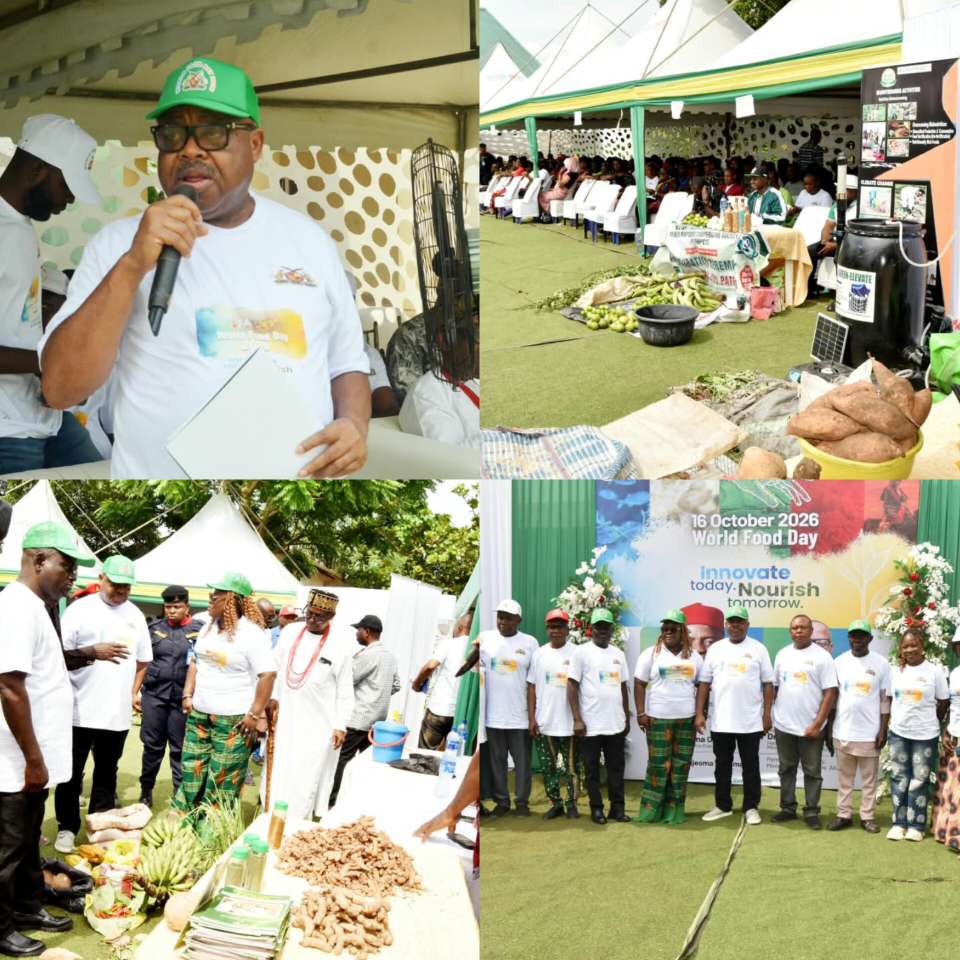
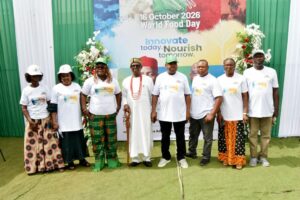
The Honourable Commissioner for Agriculture, Dr. Cliff Agbaeze, FCIB, disclosed these plans on Friday, October 16, 2026, during the “2026 World Food Day” celebration held at the Ministry of Agriculture, Bank Road, Umuahia. The event was organised under the theme: “Innovate Today. Nourish Tomorrow.”
Dr. Agbaeze explained that the state government was pursuing a comprehensive transformation of the agricultural sector through improved farmer support, technology-driven planning, increased production, climate-smart farming and stronger market linkages. The strategy is designed to strengthen the entire agricultural value chain, from the provision of quality planting materials to production, processing, storage and the eventual marketing of farm produce.
He noted that World Food Day, promoted globally by the Food and Agriculture Organization of the United Nations (FAO), provides an important opportunity to renew commitments to tackling hunger and malnutrition while building resilient, inclusive and sustainable food systems.
At the centre of Abia’s agricultural transformation strategy is the Abia State Agriculture Dynamic Database System (Abia ADDS), which is facilitating farmer enumeration and mapping across the state’s 184 wards. The digital database is expected to improve agricultural planning, enhance transparency and enable the government to identify farmers accurately and direct interventions to their intended beneficiaries.
Through better agricultural data, the government aims to strengthen decision-making, reduce inefficiencies in the distribution of farm inputs and ensure that public investments deliver measurable benefits to farming communities.
The Commissioner further disclosed that the Farmers Support Programme, flagged off on July 10, 2026, targets 18,634 farmers across Abia’s 17 Local Government Areas with improved planting materials and other agricultural inputs.
The programme is intended to raise productivity, improve farmers’ capacity to cultivate more food and strengthen the state’s food supply. By supporting farmers with essential production resources, the administration is working to address some of the challenges that limit agricultural output and contribute to rising food costs.
In another significant development, Dr. Agbaeze announced plans for a proposed 8,500-hectare rice cultivation programme, with production clusters envisaged in Arochukwu, Bende, Ohafia and Isuikwuato.
The proposed initiative represents a major opportunity to expand rice production, stimulate agribusiness activities and create employment across the agricultural value chain. With appropriate investment, improved farming techniques, processing facilities and reliable market connections, the programme could also help strengthen local food supply and improve income opportunities for participating farmers.
Dr. Agbaeze said the Ministry was exploring digital agricultural solutions to modernise farming operations and make agricultural services more accessible and efficient. The proposed solutions cover farmer registration, transparent payments, input distribution, crop monitoring, farm management, produce tracking and market access.
To achieve these objectives, the Ministry plans to strengthen partnerships with technology providers, financial institutions, research organisations and farmer groups. These collaborations are expected to produce practical and affordable innovations that increase productivity, reduce agricultural losses and improve farmers’ earnings.
Beyond expanding cultivation, the Abia State Government is also considering the development of modern farm settlements supported by essential infrastructure, technical services, digital management systems and dependable market access.
The proposed model places emphasis on processing and value addition, ensuring that agricultural produce can be transformed into higher-value products within the state rather than leaving farmers and local communities with only the benefits of primary production.
Dr. Agbaeze identified strategic agricultural assets, including Ulonna, as potential contributors to this development framework. However, he stressed that any plans involving such assets would be subject to due diligence, sound governance, commercial viability, environmental responsibility and demonstrable benefits for farmers and host communities.
The proposed approach is intended to encourage responsible agricultural investment while ensuring that local farmers and communities remain important participants in the state’s economic development.
Climate resilience also featured prominently in the Commissioner’s presentation. He explained that the administration was promoting climate-smart farming practices, improved soil and water management, better storage systems and measures to minimise post-harvest losses.
These interventions are particularly important as farmers contend with changing weather patterns, production uncertainties and the challenge of preserving harvested crops. Improving resilience at farm level, alongside storage and handling systems, can help protect farmers’ investments, reduce waste and increase the quantity of food reaching consumers.
In livestock production, Dr. Agbaeze highlighted the importance of locally available feed resources and the safe use of suitable agricultural by-products to reduce production costs.
He noted that circular-economy practices could further improve efficiency by encouraging the productive reuse of agricultural resources and returning nutrients to the production system. Such measures would help reduce waste, improve resource utilisation and support more sustainable agricultural operations.
The Commissioner emphasised that achieving lasting agricultural development would require sustained cooperation among government institutions, farmers, host communities, universities, financial institutions, technology providers and responsible investors.
He identified the Ministry’s priorities as strengthening agricultural data and extension services, improving farmer support, developing commodity clusters and market linkages, attracting credible investment, expanding digital and climate-smart technologies, and creating greater opportunities for women, young people and rural enterprises.
According to him, the broader objective is to achieve higher agricultural productivity, stronger agribusinesses, increased employment and reduced post-harvest losses, while improving the economic conditions of farming communities throughout Abia State.
Also speaking at the celebration, the State Chief Veterinary Officer, Dr. Onu Nwokedi, described World Food Day as an opportunity to renew collective commitment to ending hunger and malnutrition while building stronger food systems for present and future generations.
Dr. Nwokedi stressed that agriculture remained indispensable to feeding a growing population and called for greater adoption of digital agricultural technologies to improve productivity, strengthen resilience and support the development of more efficient farming systems.
In a lecture titled “Planting and Proper Management of Improved Seeds and Seedlings,” Igwe Walter explained that improved seeds and seedlings could deliver higher yields and greater resistance to pests and diseases when managed in accordance with recommended agronomic practices.
He outlined the appropriate procedures for handling and managing improved planting materials, encouraging farmers to recognise quality seeds and seedlings as important investments capable of increasing agricultural output and profitability.
In her vote of thanks, the Permanent Secretary of the Ministry of Agriculture, Mrs. Ijeoma Adanma Aguwa, PhD, commended farmers for adhering to the Ministry’s guidelines on the handling of improved seeds and seedlings.
She urged them to sustain their cooperation with the state government as it intensifies efforts to reposition agriculture, improve food production and strengthen the sector’s contribution to the state’s economy.
The celebration also featured exhibitions of agricultural products by farmers from different Local Government Areas and farmers’ cooperative societies. The exhibitions showcased the diversity of agricultural produce across Abia and highlighted the potential for increased production, enterprise development and improved rural livelihoods.
With expanded farmer support, digital innovation, proposed large-scale rice cultivation, climate-smart practices and plans for modern farm settlements, the Abia State Government is pursuing a broader vision of agriculture that goes beyond subsistence farming to embrace commercial production, value addition and sustainable economic opportunities.
The Ministry of Agriculture reaffirmed its commitment to supporting farmers, promoting innovation and strengthening sustainable food production as the Otti administration continues its efforts to improve food security and the welfare of Abians.
The state’s agricultural development agenda ultimately seeks to connect improved farming practices with better incomes, stronger rural economies, greater employment opportunities and a more resilient food syste



 m capable of meeting the needs of present and future generations.