
NEWS
How Colonel Ma’aji Allegedly Planned to Overthrow Tinubu’s Government — Documents Reveal

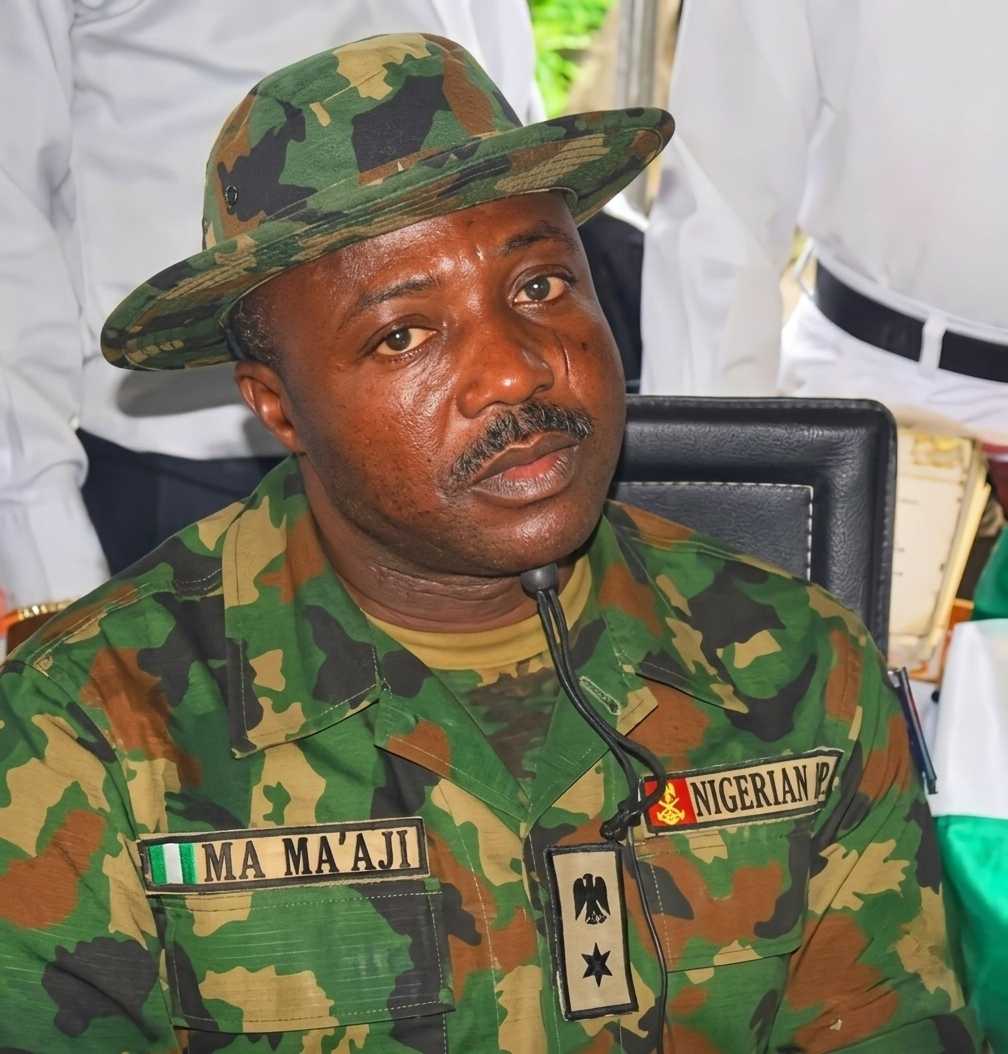
A Nigerian Army colonel, Mohammed Ma’aji, allegedly spearheaded a plot to overthrow the democratically elected government of President Bola Tinubu in a coup d’état, with the plan reportedly dating back to the final years of former President Muhammadu Buhari’s administration.
The alleged conspiracy, which was eventually uncovered in September 2025, reportedly collapsed before the public became aware of its existence, triggering the arrest and interrogation of serving and retired military officers, police personnel and civilians suspected of playing various roles in the scheme.
Nigeria has a long and turbulent history of military intervention in politics, including unsuccessful coup attempts, plots that were stopped during the planning stage and six successful coups. However, the alleged 2025 plot emerged more than three decades after Nigeria’s last successful military takeover of government.
The Defence Headquarters initially responded cautiously to the development, describing the investigation involving the arrested officers as an internal process designed to maintain discipline and professionalism within the military.
The development nevertheless caused significant concern within the administration, with the government cancelling the 2025 Independence Day parade and announcing major changes within the military hierarchy, including the removal of then Chief of Defence Staff, Christopher Musa.
Although reports at the time linked the cancellation of the parade to the alleged coup plot, the military authorities said the President had cancelled the event to enable him to attend a strategic bilateral engagement outside Nigeria.
The Defence Headquarters later acknowledged that there had been an attempt to overthrow the Tinubu administration and stated that indicted officers would face military judicial proceedings.
Investigations into the alleged conspiracy subsequently expanded considerably. What began with the arrest of 16 serving military officers in September 2025 had, by February, grown to about 40 suspects, including senior officers across the armed forces, a police officer and civilians allegedly involved in reconnaissance, funding and propaganda activities.
Documents obtained in connection with the investigation provide a detailed picture of the alleged movement and the activities of some of its key figures.
The documents reportedly run into approximately 7,424 pages and include bank statements, encrypted-chat conversations, hotel receipts, records of purchases and statements obtained from individuals questioned by military investigators.
Among the central figures identified in the investigation is Ma’aji, a 50-year-old Army colonel from Niger State who had twice failed to secure promotion to the rank of brigadier general.
Ma’aji was arrested on September 29, 2025, the same day the government announced the cancellation of the Independence Day parade.
According to statements reportedly signed by Ma’aji and a military investigator, he was interrogated between October 18, 2025, and February 19, 2026, at the headquarters of the Nigerian Army Corps of Military Police in Asokoro, Abuja.
In his account to investigators, Ma’aji traced the origins of the alleged movement to 2023, when he and some officers became increasingly concerned about insecurity, corruption, unemployment, economic hardship and what they perceived as failures of governance.
He reportedly said the initial plan was to identify military officers who shared similar concerns and gradually bring them into the movement.
The colonel also told investigators that the initial plan was eventually abandoned because of inadequate funding, logistics and manpower.
According to his statement, much of the money used in the early stages came from his personal resources and contributions from some associates. He reportedly sold three houses in Kaduna State as well as a students’ hostel at Ahmadu Bello University, Zaria, to finance activities linked to the movement.
The alleged movement was later revived after Ma’aji failed a second promotion attempt in 2024.
He reportedly told investigators that some officers subsequently pressured him to revive the movement because they feared he could be retired prematurely.
One of those identified as being particularly active in the alleged revival was Lieutenant Colonel Shamsuddeen Bappah, who reportedly travelled from Ibadan to Abuja to persuade Ma’aji to continue with the plan.
Meetings were subsequently held at different locations in Abuja, including Brookville Hotel and Greenland Hotel in Lokogoma, as the group allegedly attempted to recruit additional officers and secure the resources needed to execute its plans.
Ma’aji reportedly maintained that his failed promotion was not the primary reason for the alleged conspiracy. Instead, he attributed the movement largely to dissatisfaction with the country’s political and economic situation.
Among the issues reportedly cited by him were the removal of fuel subsidy, the floating of the naira, taxation policies, electricity tariff increases, corruption, unemployment and insecurity.
He also reportedly expressed frustration over the handling of protests by Nigerian youths, including the #EndSARS and #EndBadGovernance demonstrations, as well as concerns over the welfare of military personnel, veterans and retirees.
According to the investigation documents, the alleged movement had not reached the stage of a fully operational coup when security agencies intervened.
Ma’aji reportedly told investigators that there was no fixed date for the alleged takeover because the group was still trying to mobilise additional officers, soldiers, resources and logistics.
He allegedly identified several military personnel and civilians who were approached or recruited at different stages, while also describing attempts to secure access to strategic locations and mobilise personnel.
The documents further allege that plans were being developed to arrest senior military officials, including service chiefs, while other participants were expected to mobilise troops and equipment.
There were also alleged plans to recruit personnel from the Civilian Joint Task Force in the North-East.
According to Ma’aji’s account, the idea was to use members of the group as additional manpower, although the proposed mobilisation was reportedly never completed.
The investigation also examined the alleged involvement of civilians and individuals with access to sensitive locations.
Among those identified in the wider investigation were a police inspector, Ahmed Ibrahim, and Zekeri Umoru, an electrician at the Presidential Villa.
Ma’aji reportedly said he became acquainted with Ibrahim through personal connections before the alleged plot developed, while Ibrahim allegedly facilitated the recruitment of Umoru.
Investigators also questioned the alleged financial structure of the movement.
In one of his statements, Ma’aji reportedly claimed that a former Bayelsa State governor, Timipre Sylva, became involved at a later stage and allegedly contributed about N400 million.
Sylva, however, has strongly denied any involvement in the alleged conspiracy.
The former governor, who previously served as Minister of State for Petroleum Resources, described himself as a committed democrat and said he had no involvement in planning or financing any coup.
His representatives also stated that he and his wife were outside Nigeria at the time of the security operation against his Abuja residence.
Despite his denial, individuals associated with him have reportedly been charged over allegations relating to concealing his whereabouts, while properties linked to him have been subjected to interim forfeiture proceedings.
Meanwhile, the legal proceedings surrounding the alleged coup have been divided between civilian and military courts.
In April, the Federal Government filed 13 charges against six individuals allegedly connected to the conspiracy. Those facing charges include retired Major-General Mohammed Ibrahim Gana, retired Navy Captain Erasmus Ochegobia Victor, Police Inspector Ahmed Ibrahim, Presidential Villa electrician Zekeri Umoru, Bukar Kashim Goni and Zaria-based Islamic cleric Abdulkadir Sani.
While the retired military officers and civilians are being tried before a civil court, serving military personnel, including Ma’aji, are facing proceedings before a court-martial.
More than 30 individuals were reportedly interrogated during the investigation, with their statements forming part of the prosecution’s evidence.
However, the admissibility of several statements has become a major legal issue after some defendants alleged that their statements were not obtained voluntarily.
The court subsequently ordered a trial-within-trial to determine whether the statements were freely given before deciding whether they can be admitted as evidence in the substantive proceedings.
Ma’aji and other defendants have denied wrongdoing and challenged the admissibility of written statements and video recordings of their interrogations.
The prosecution, however, maintains that the investigations were conducted in accordance with due process and has urged the courts to reject the defendants’ objections.
The allegations contained in the statements of Ma’aji and other suspects do not, by themselves, establish criminal guilt. The courts will ultimately determine the culpability or innocence of each defendant after considering the evidence presented by both the prosecution and the defence.
The alleged coup plot has nevertheless raised fresh questions about the relationship between Nigeria’s military establishment and the country’s political leadership, particularly against the backdrop of widespread economic hardship, insecurity and public dissatisfaction.
For the investigators, the case centres on an alleged attempt by a group of serving and retired military officers and civilians to use military intervention to force a change of government.
For the defendants, however, the allegations remain contested, with several of them insisting that their statements were improperly obtained and that the prosecution has yet to establish their guilt.
As proceedings continue, the courts are expected to determine whether the extensive body of documents, financial records, communications, interrogation statements and other evidence gathered by investigators can establish the existence and extent of the alleged conspiracy and, ultimately, the individual responsibility of those standing trial.If you want, I can also make this more dramatic and investigative in the style of a major Nigerian newspaper, while keeping it strictly factual and legally cautious.
Source: PREMIUM TIMES