
NEWS
Why Is the U.S. Building Its Largest Consulate in Nigeria Amid Tighter Visa Restrictions?

Questions are being raised over the strategic rationale behind the United States’ decision to construct what is expected to become its largest consulate in the world in Lagos, Nigeria, at a time when Washington is tightening visa restrictions and enforcement measures affecting Nigerians.
The issue was brought to public attention by a Twitter user, @Midatbllog, who questioned the apparent contrast between the massive investment in the new diplomatic facility and the increasingly restrictive visa environment faced by Nigerians seeking to travel to the United States.
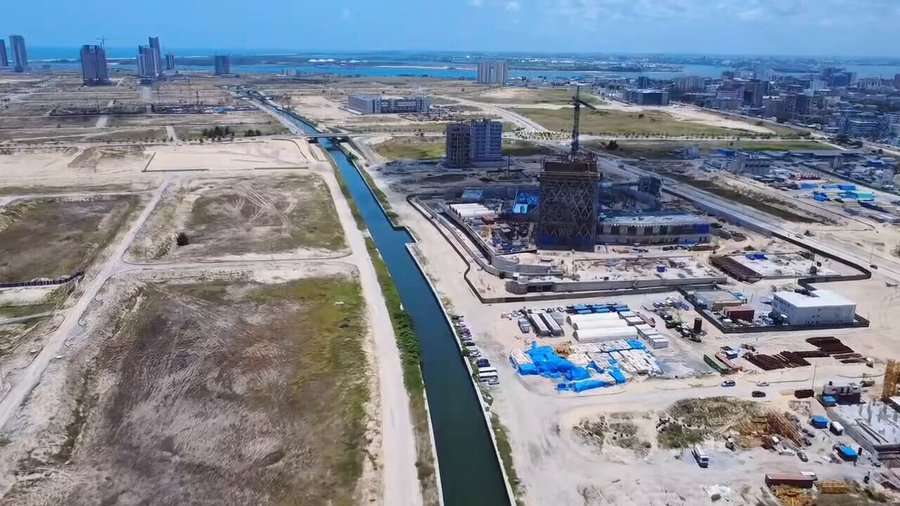
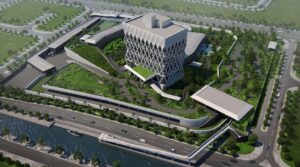
The planned U.S. Consulate General is located within Eko Atlantic City, Lagos, on approximately 12.2 acres of land. The project is reportedly valued at about $537 million and consists of a 10-storey complex designed to serve as a major diplomatic and consular hub.
Construction of the facility was still ongoing in early 2026, with photographs and architectural renderings of the proposed complex circulating online and attracting attention from Nigerians.
The project has also renewed discussions about the long-term relationship between Nigeria and the United States, particularly in the areas of diplomacy, trade, security, immigration and people-to-people relations.
The Twitter user questioned why the U.S. would commit more than half a billion dollars to establishing such a large diplomatic presence in Nigeria while simultaneously introducing measures aimed at reducing or tightening access to American visa and consular services.
She asked what the strategic reasoning could be behind the development, particularly if the volume of visa and consular services available to Nigerians is expected to become more restricted.
Sharing an update on the construction project, she said:
“This is the construction update on the $500 million U.S. Consulate Office.
The largest U.S. consulate office in Nigeria’s commercial capital.
Eko Atlantic City, Lagos“
The development comes against the backdrop of Nigeria’s importance to U.S. interests in Africa. Nigeria remains one of the continent’s largest economies and most populous countries, making Lagos a significant location for American diplomatic, economic and consular activities.
Beyond visa processing, a major diplomatic facility can support a broad range of functions, including political engagement, economic and commercial relations, security cooperation, public diplomacy and assistance to American citizens.
The size of the planned facility has nevertheless generated curiosity, especially among Nigerians who have been following changes in U.S. immigration and visa policies.
The debate therefore centres on whether the construction of the new consulate should be viewed primarily as a long-term investment in U.S.-Nigeria diplomatic relations, rather than as an indication of an expansion in visa services.
As construction progresses, attention is likely to remain focused on the eventual capacity and functions of the facility, as well as how its opening will align with the United States’ broader vi
 sa policies toward Nigerians.