
NEWS
FG Rules Out Electricity Tariff Hike, Unveils 17.7MW Solar Mini-Grid Project to Boost 24-Hour Power Supply

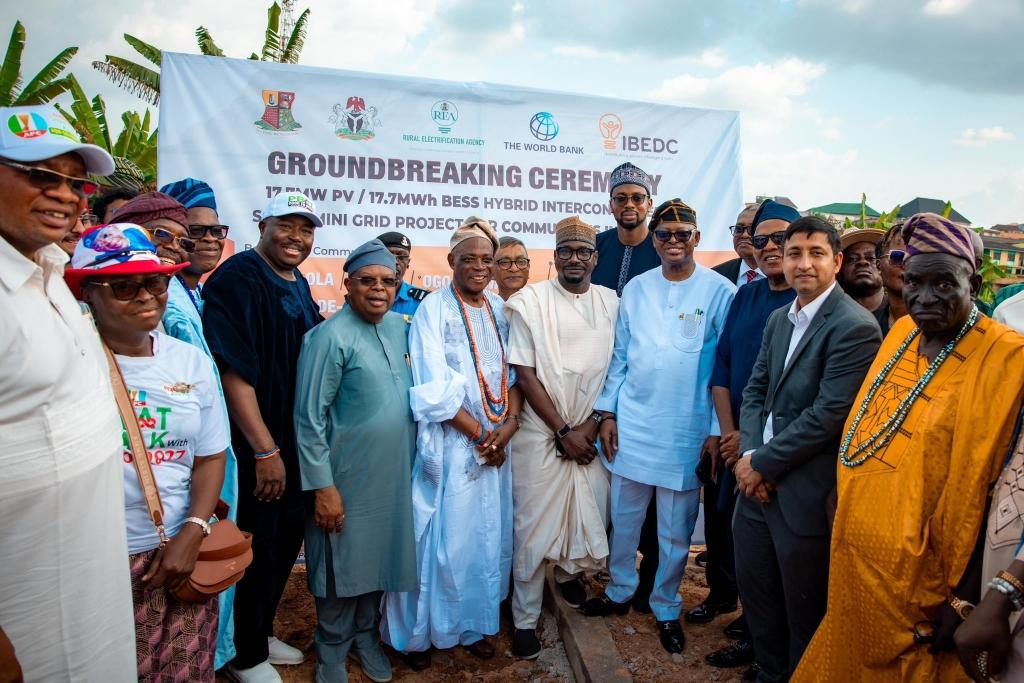
 The Federal Government has ruled out any planned increase in electricity tariffs, assuring Nigerians that its priority is to improve power generation, strengthen electricity distribution and deliver more reliable, round-the-clock electricity supply across the country.
The Minister of Power, Joseph Tegbe, gave the assurance on Thursday in Ibadan, Oyo State, while flagging off a 17.7-megawatt hybrid solar mini-grid project backed by a 17.74MW Battery Energy Storage System designed to provide electricity to underserved communities across five local government areas of the state.
Tegbe dismissed reports circulating on social media suggesting that the Federal Government was planning to increase electricity tariffs, describing the claims as misinformation and urging Nigerians not to be misled by such reports.
“I want to say this clearly and without ambiguity: there is no plan to increase electricity tariffs.
“What we are planning is a power sector that works round the clock,” he said.
The minister explained that the Federal Government’s electricity reform agenda was focused on addressing persistent power supply challenges, expanding access to electricity and building a more dependable energy system capable of supporting businesses, households, industrial development and economic growth.
As part of the strategy, he disclosed that the government was working towards strengthening three major energy corridors: the Lagos-Ogun corridor, the Abuja-Kaduna-Kano corridor, and the Benin-Enugu-Port Harcourt corridor.
According to him, the initiative forms part of a broader plan to develop and improve the national grid across the eastern, western and central corridors, enhance system stability and extend the government’s vision of uninterrupted electricity supply to communities throughout Nigeria.
The 17.7MW hybrid solar mini-grid project represents another significant intervention in the effort to bridge the electricity access gap, particularly in rural and underserved areas that have struggled with inadequate power supply.
The project will serve beneficiary communities across Akinyele, Ido, Ibadan North, Egbeda and Lagelu Local Government Areas of Oyo State. By combining solar photovoltaic generation with battery storage and existing electricity distribution infrastructure, the initiative is expected to improve electricity availability for households, businesses and other users.
Tegbe said the project would reduce dependence on petrol and diesel-powered generators, lower the burden of unreliable electricity on businesses and create a more favourable environment for investment, enterprise development and employment generation in the benefiting communities.
He commended President Bola Tinubu for his leadership under the Renewed Hope Agenda and appreciated the Olubadan of Ibadanland for supporting initiatives aimed at improving electricity access.
The minister also acknowledged the contributions of the Rural Electrification Agency (REA), Paras Energy, the World Bank, the Ibadan Electricity Distribution Company (IBEDC) and the Oyo State Government towards advancing the project.
Providing further details, the Managing Director and Chief Executive Officer of IBEDC, Mr Deolu Ijose, disclosed that the mini-grid initiative would deliver electricity to 22,597 customers across five community clusters.
Ijose explained that the project, developed by Paras Energy and Natural Resources Development Limited, would provide 17.7MWp of solar photovoltaic generation supported by battery storage to the Bola, Jiboye, Molade-Adelubi, Ogo-Oluwa and Sooko-Elega clusters.
He noted that IBEDC’s existing distribution infrastructure would be used to integrate and deliver the electricity generated by Paras Energy, demonstrating how distribution companies and private-sector developers could work together to expand access to reliable power without depending exclusively on conventional grid expansion.
According to him, the partnership model offers a practical pathway for addressing electricity supply gaps, particularly in communities where existing infrastructure has been unable to meet demand.
Ijose added that the initiative builds on IBEDC’s previous interventions, including the Mokoloki Mini-Grid in Ogun State and the recently commissioned Oke-Oyi mini-grid in Kwara State.
He urged residents of the host communities to protect the facilities against vandalism and other forms of damage, stressing that community cooperation would be essential to the long-term sustainability of the project.
Also speaking, the Managing Director and Chief Executive Officer of the Rural Electrification Agency, Abba Abubakar-Aliyu, outlined the distribution of the project’s generating capacity across the five beneficiary locations.
The breakdown includes 1.8 megawatts for Bola in Akinyele Local Government Area, 3.5 megawatts for Jiboye in Ido Local Government Area, 6.9 megawatts for Molade in Ibadan North Local Government Area, 3.6 megawatts for Ogo-Oluwa in Egbeda Local Government Area, and 1.9 megawatts for Sooko in Lagelu Local Government Area. The project is expected to strengthen electricity access across the five locations while demonstrating the potential of decentralised renewable energy systems to complement Nigeria’s conventional power infrastructure.
Earlier, the Olubadan of Ibadanland, Oba Rashidi Ladoja, commended the Minister of Power for ensuring that rural and underserved communities were included in the Federal Government’s electricity reform initiatives.
The traditional ruler also urged the Oyo State Government to accelerate work on its ongoing hybrid power project and complete it before 2027 to enable residents to begin benefiting from improved electricity supply.
Representing Governor Seyi Makinde at the event, the Oyo State Commissioner for Energy and Mineral Resources, Professor Dahud Shangodoyin, reaffirmed the state government’s commitment to practical and sustainable electricity interventions across the state. He disclosed that the state government’s Hybrid Independent Power Project, designed to provide electricity to the state secretariat and other strategic public facilities, has an installed capacity of 11 megawatts.
Shangodoyin recalled that the five-megawatt phase of the project was commissioned in 2024, describing the initiative as part of the state’s broader strategy to diversify its electricity sources and improve power availability at critical public institutions.
“Our wide agenda includes solar power for public facilities, rural electrification, mini-grids, as well as private sector-led generation and distribution.
“Therefore, no single technology can meet every need,” said Makinde.
The governor further charged the project developer and implementing institutions to maintain clear construction and commissioning plans while complying with relevant licences, technical requirements and applicable industry standards.
The launch of the 17.7MW hybrid solar mini-grid project highlights the growing role of renewable energy, private-sector investment and collaboration between electricity distribution companies and government agencies in addressing Nigeria’s persistent power challenges.
With its combination of solar generation, battery storage and existing distribution infrastructure, the project is expected to provide a practical model for extending electricity access to communities that have remained underserved by conventional power supply arrangements.
The Federal Government’s position against an electricity tariff hike, alongside its renewed emphasis on expanding generation capacity and strengthening distribution infrastructure, places the focus on improving the reliability and accessibility of electricity as a foundation for economic growth, business productivity and better living conditions for Nigerians.s