
NEWS
AI DESIGNS FULLY FUNCTIONAL VIRUSES FOR THE FIRST TIME, SPARKING SCIENTIFIC BREAKTHROUGH AND SAFETY FEARS

Researchers in the United States have achieved a major scientific breakthrough after using artificial intelligence to design entirely new viruses capable of functioning and replicating in a laboratory, a development scientists say could transform medicine while simultaneously raising serious biosafety concerns.
For the first time, scientists have successfully used generative artificial intelligence to design complete viral genomes from scratch, demonstrating that AI systems can move beyond analysing biological information to actually creating new genetic sequences capable of performing biological functions.
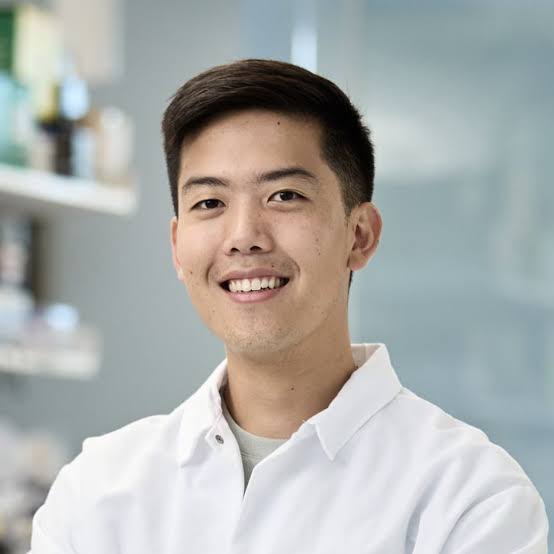
The breakthrough was achieved by researchers at Stanford University, who designed 16 novel viruses that were subsequently shown to be functional in laboratory experiments.
Importantly, the viruses were bacteriophages, meaning they are specifically designed to infect bacteria rather than humans or other complex organisms. The researchers say the viruses pose no threat to people.
Nevertheless, the achievement has triggered intense discussion within the scientific community because it demonstrates how rapidly artificial intelligence is expanding the boundaries of synthetic biology.
Experts have described the development as a “very significant turning point” in science, with the technology potentially opening new avenues for treating infectious diseases, developing medicines and addressing some of the most difficult challenges in modern healthcare.
At the same time, scientists have warned that the ability to generate entirely new viral genomes could potentially be misused, creating what experts describe as “urgent” safety and security concerns.
Artificial intelligence systems have already demonstrated an ability to design biological molecules, including new antibiotics.
However, designing an entire functional virus is significantly more complicated because a complete genome must contain the instructions necessary for the virus to operate and reproduce inside a host cell.
Brian Hie, an assistant professor at Stanford University, described the achievement as a major expansion of what generative AI can accomplish.
“This is a next step in the complexity that’s designable by generative AI, this is the first time generative AI has been used to design a complete genome, it’s something that can replicate and have other functions inside cells… this was new territory for us,“ Brian Hie, assistant professor at Stanford University, told the BBC.
The technology operates on a principle similar to the large language models behind systems such as ChatGPT. While conventional AI language models predict what words or sequences of text are likely to come next, the biological models used by the Stanford team predict sequences within genetic material.
In other words, instead of learning the language of human communication, the systems were trained to recognise patterns in what scientists describe as the “language of life.”
The models, known as Evo1 and Evo2, were trained using genetic information from viruses, bacteria, plants and humans. Researchers subsequently refined the systems so that they could generate designs for bacteriophages, viruses that specifically target bacteria.
The researchers generated hundreds of potential viral genomes and selected 302 of the most promising designs for laboratory testing.
Those designs were then synthesised and tested to determine whether they could function as intended.
Of the 302 designs, 16 ultimately proved effective at infecting and killing E. coli bacteria.
The discovery produced an extraordinary moment in the laboratory, according to Samuel King, a PhD student involved in the research.
The scientists placed the newly created phages on petri dishes containing layers of bacteria and waited to see whether the viruses would successfully attack the bacterial cells.
“We were starting to see these clear spots and it was just extremely exciting,“ says King.
The clear areas were signs that the bacteria were being destroyed by the newly created phages.
When the results were presented to the wider research team, the reaction was immediate.
“tThe room spontaneously burst into applause,“ Hie recalls.
The successful experiments provided evidence that AI-generated genetic sequences could move beyond theoretical computer predictions and produce biological entities capable of performing their intended functions.
One of the most promising applications of the technology could be the development of new bacteriophages for treating bacterial infections that no longer respond effectively to conventional antibiotics.
Antibiotic resistance has become one of the major challenges facing global healthcare, with some bacteria developing resistance to multiple existing medicines.
Bacteriophages offer a different approach because they can be engineered or selected to target particular bacteria.
The ability to use AI to rapidly design new phages could therefore provide scientists with a powerful tool for exploring potential treatments against difficult-to-treat infections.
Hie believes the broader possibilities could extend well beyond phage therapy.
He argues that the technology has the potential to “massively improve human health” through the development of new medicines and therapies.
Despite the excitement surrounding the discovery, scientists acknowledge that the ability to generate new biological systems using AI comes with significant risks.
The research represents an important step into synthetic biology, a field focused on designing or modifying biological systems beyond what occurs naturally.
While the Stanford researchers deliberately focused on bacteriophages that infect bacteria, experts warn that increasingly sophisticated AI systems could eventually be capable of designing biological agents with much greater complexity.
In a commentary accompanying the study’s publication in the journal Science, Dr Thomas Inglesby and Dr Moritz Hanke of the Center for Health Security at Johns Hopkins University highlighted the potential dangers.
The researchers said the findings raise “urgent biosafety and biosecurity questions.”.
They argued that the scientific debate has moved beyond simply asking whether AI will eventually be capable of generating viral genomes.
They said it was no longer a question of “whether generative viral genome design will exist” but whether it can be used without “enabling serious harm”.
The experts also warned that viruses with the potential to cause disease “should not be pursued.”
Their concerns underline the growing challenge facing scientists and policymakers: how to encourage legitimate medical and scientific applications of increasingly powerful AI systems while preventing the technology from being used to create dangerous biological agents.
The Stanford researchers say safety was a major consideration throughout the project.
They excluded viruses capable of infecting complex organisms from the training database and deliberately focused their experiments on bacteriophages rather than viruses capable of infecting humans.
The work was also conducted in a secure laboratory environment.
Hie argues that safeguards of this nature can play an important role in ensuring that increasingly powerful biological AI technologies are developed responsibly.
He believes existing measures can contribute significantly towards “ensuring that the technology is used for good.”
However, the rapid pace of AI development means researchers and regulators may have to continuously reassess whether existing safeguards remain sufficient as the technology becomes more capable.
The achievement also highlights the enormous distance that remains between designing a virus and designing a living organism.
Viruses are generally not considered living organisms in the conventional sense. They cannot independently reproduce and instead require host cells to replicate.
The bacteriophage genomes used in the research are approximately 5,400 base pairs long.
By comparison, the smallest genomes found in living cells are around 500,000 base pairs, while the human genome contains approximately three billion base pairs.
That enormous difference illustrates why the successful creation of functioning phages does not mean scientists are immediately capable of creating complex living organisms through AI.
Nevertheless, Hie suggested that designing simpler organisms could eventually become technically achievable.
He said “it would probably be a lot of work, but not impossible” to attempt some simple organisms and that researchers were “definitely interested in working towards” that.
The implications of the research have attracted attention from synthetic biology experts around the world.
Prof Marc Güell, from the synthetic biology laboratory at Pompeu Fabra University in Spain, described the study as a “very significant turning point.”
He said the achievement was significant because for the “first time in history, we are beginning to design biology on a computer.”
According to Güell, the possibilities opened by the technology could extend to some of humanity’s biggest medical challenges.
He highlighted potential applications including developing phages to combat disease, creating enzymes capable of treating genetic disorders and producing antibodies for use in immunotherapy.
Prof Patrick Cai, chair of synthetic genomics at the Manchester Institute of Biotechnology, also described the research as an “important milestone.”
“The significance extends far beyond phages, it suggests that genome language models are beginning to learn the design principles encoded by evolution, opening the door to AI-assisted genome writing.“
The development marks a striking new chapter in the relationship between artificial intelligence and biology.
For decades, scientists have used computers to analyse genomes and understand biological systems. The latest breakthrough suggests that AI is beginning to move into a fundamentally different role not merely reading the genetic code, but helping scientists write new biological instructions.
That prospect carries enormous promise for medicine, biotechnology and scientific discovery.
But it also presents a difficult question for the future: as AI becomes increasingly capab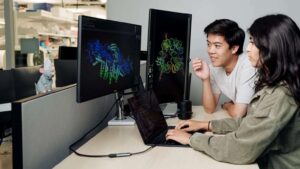
 le of designing biology, how can humanity ensure that the same technology remains a force for healing rather than harm?