
NEWS
Peller–Ochacho ₦400 Million Property Drama: The Power of Attorney Behind the Controversy

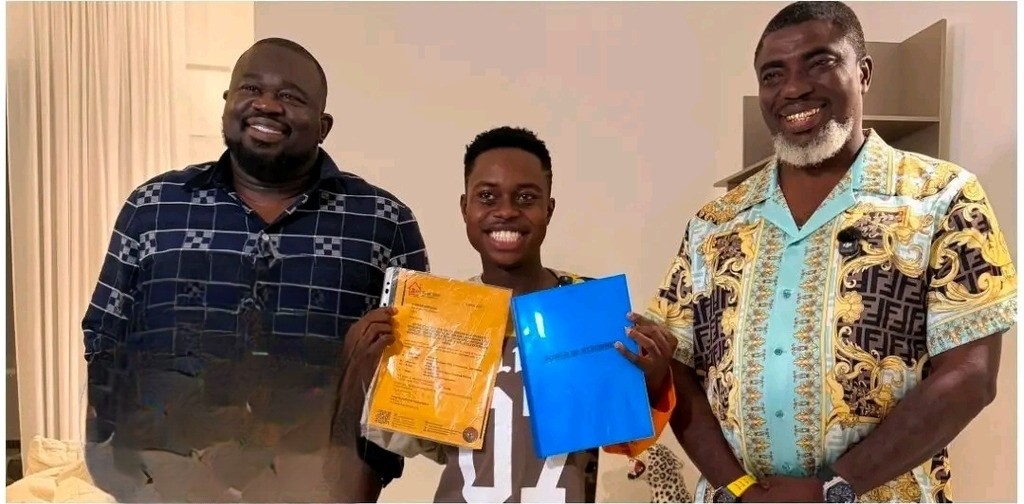
The ongoing drama surrounding the alleged ₦400 million property promised to popular social media personality Peller by businessman Mr Ochacho has sparked fresh conversations about property ownership, legal documentation and the difference between being given authority over a property and actually becoming its legal owner.
At the centre of the controversy is a document reportedly handed to Peller in connection with the property. A closer look at the document shows that it is titled Power of Attorney, a legal instrument that has now become the subject of intense public discussion.
The distinction is important. Under Nigerian property law, a Power of Attorney generally does not, by itself, transfer ownership of land or a building from one person to another. Instead, it ordinarily authorises one person, known as the attorney or agent, to perform specified acts on behalf of another person, known as the donor or principal.
In the case generating public attention, the argument being made is that Peller may have been granted authority to act in relation to the property without necessarily becoming the legal owner of the property itself.
That means the existence of the document should not automatically be interpreted by members of the public as evidence that ownership of the ₦400 million property has been transferred to Peller.
The legal effect of any particular Power of Attorney, however, depends on its exact wording, the circumstances surrounding its execution and the nature of the transaction for which it was granted. It is therefore important to distinguish between what the document actually says and how it may be portrayed on social media.
Another major issue is whether the Power of Attorney is revocable or irrevocable. A Power of Attorney expressly made irrevocable may have a different legal effect from an ordinary revocable Power of Attorney, particularly where it is coupled with an interest or given as security for a transaction.
There is also a widespread misconception that the death of the person who granted a Power of Attorney automatically settles every question surrounding the underlying property. In reality, the legal consequences can depend on the nature of the authority, the terms of the document, the underlying transaction and applicable law.
Most importantly, a Power of Attorney should not simply be treated as a substitute for the formal instruments required to transfer an interest in land or real property. Depending on the circumstances and the nature of the property, other documents and legal requirements may be necessary to establish and perfect ownership.
This is why the Peller–Ochacho controversy offers a useful lesson to the public: never assume that possession of a legal document automatically means ownership of the property mentioned in it.
A person can have authority to act concerning a property without being its owner. The situation also highlights the importance of obtaining independent legal advice before accepting, transferring, purchasing or publicly presenting any property as a gift. Social media excitement does not change the legal character of a document.
Whether the ₦400 million property was ultimately gifted to Peller, whether the Power of Attorney was intended to facilitate a transfer, or whether it merely granted him authority to act on behalf of Ochacho can only properly be determined by examining the actual documents and the surrounding transaction.
And that is where the lawyers come in. While social media may focus on the spectacle surrounding the alleged gift, lawyers are more concerned with the precise legal instruments, the intention of the parties, the nature of the interest created and whether the necessary legal steps for transferring that interest were completed. The law, after all, is not governed by social media emotions.
The Peller–Ochacho saga may therefore be more than just another viral property drama. It is also a reminder that when it comes to real estate, the difference between a promise, authority and legally perfected ownership can be enormous.
Before anyone uses the situation as a benchmark for property transactions in Nigeria, the documents should be properly examined by a qualified property lawyer.
Ignora nce of the law is no excuse.