NEWS
“Storm in a Teacup; Journey to Nowhere“ — Keyamo Dismisses Fresh US Legal Threat Over Tinubu Records

The Nigerian government has dismissed a fresh threat by a United States-based political advisory and lobbying firm to pursue further legal action over records relating to President Bola Tinubu, describing the latest development as a “journey to nowhere.”
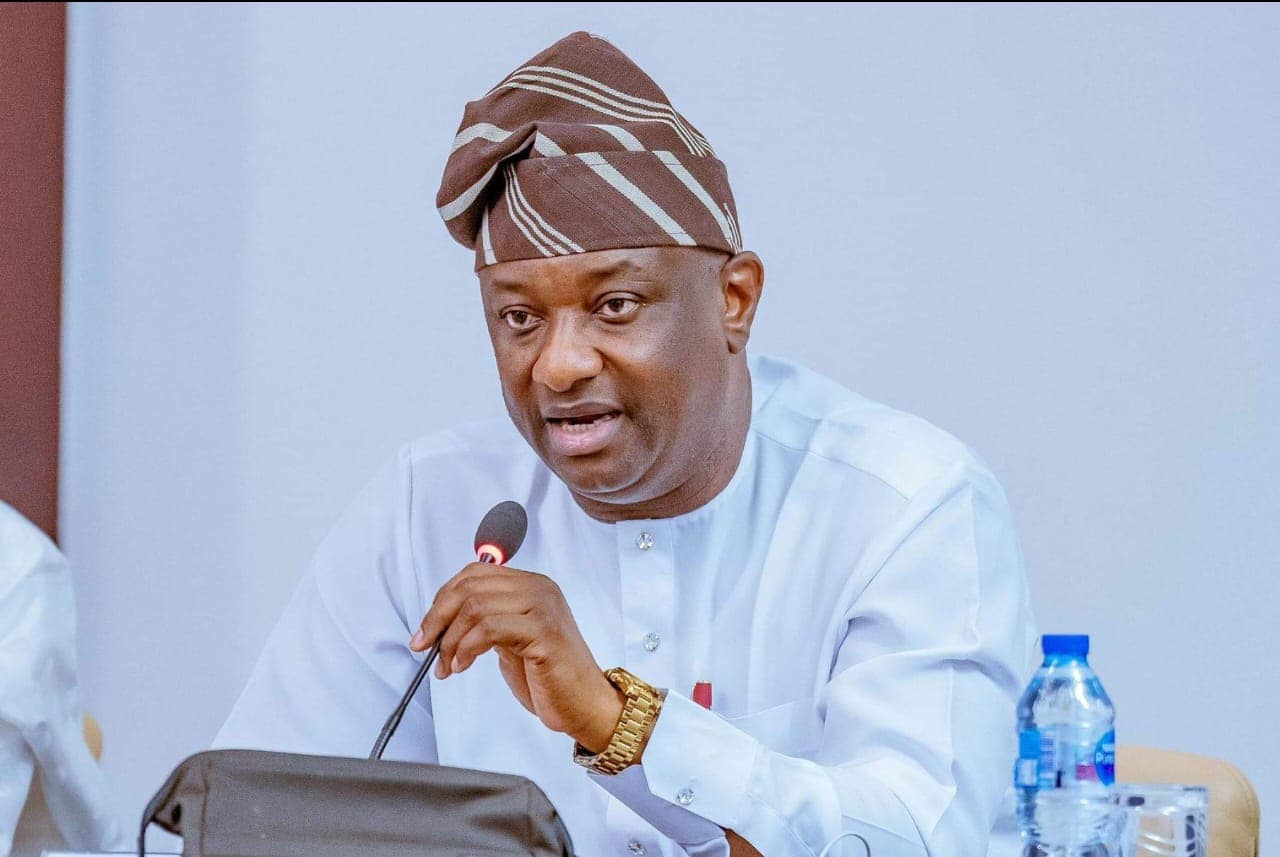
Minister of Aviation and Aerospace Development, Festus Keyamo, made the declaration in reaction to a statement issued by Von Batten-Montague-York, a US political advisory and lobbying firm that has been pursuing access to historical records held by American law enforcement agencies concerning Tinubu.
The latest exchange has added another layer to an already contentious dispute that has attracted attention in Nigeria and the United States, particularly over allegations surrounding Tinubu’s past and efforts to obtain records from the Federal Bureau of Investigation and the Drug Enforcement Administration.
In its latest statement posted on X, the firm accused the Nigerian Presidency and some senior government officials of allegedly mounting what it described as a coordinated campaign against its activities in the United States.
The organisation claimed that the Nigerian Presidency “loves to dig itself into a hole” and alleged that what it described as Tinubu’s campaign against its principal, Dr. Von Batten, now involved presidential advisers Bayo Onanuga and Sunday Dare, as well as Keyamo.
According to the firm, the alleged actions by the officials were designed to interfere with what it described as its First Amendment-protected advocacy and petitioning activities.
It maintained that its activities were focused on obtaining records from US government agencies relating to allegations concerning Tinubu’s past.
Keyamo, however, offered a brief dismissal of the latest claims, writing, “Storm in a teacup; journey to nowhere.”
The response came after the firm announced that it was preparing two separate actions in connection with what it described as the Nigerian government’s involvement in the controversy.
One of the proposed actions, according to the organisation, is the submission of “supplemental evidence” to the United States District Court for the District of Columbia.
The firm said the additional material would document what it described as recent developments and support its argument that Tinubu should not be allowed to seek privacy over investigative records while officials within his administration allegedly continue to publicly discuss the controversy surrounding those records.
The organisation said, “You cannot deploy the machinery of your government in the court of public opinion and then run into a U.S. federal court demanding privacy.”
It further announced plans to report what it characterised as a broader pattern of conduct to the FBI for independent review.
According to the firm, the proposed report would include what it described as the public targeting of Dr. Von Batten and alleged contacts with the White House concerning his reported appointment to a presidential commission.
The organisation was, however, careful to state that it was not asserting that a federal crime had been committed, stressing that determining whether any offence had occurred was a matter for US authorities.
“When officials of a foreign government, Nigeria, bring their campaign against an American advocate into American institutions, the appropriate U.S. authorities should know,” the firm said.
The dispute comes amid renewed scrutiny of a legal battle in the United States involving efforts to obtain historical records from the FBI and DEA concerning investigations connected to Tinubu.
The controversy has also spilled into discussions about whether the Nigerian president could face any legal restrictions should he travel to New York for the 81st session of the United Nations General Assembly.
Nigeria’s Permanent Representative to the United Nations, Ambassador Jimoh Ibrahim, has dismissed such concerns, saying the Nigerian Mission to the UN had not received any communication from the US government suggesting that Tinubu would be arrested or restricted during the General Assembly.
Ibrahim pointed to protections contained in Section 11 of the 1947 UN-U.S. Agreement, which provides for protection against impediments to representatives of UN member states while travelling to and from the UN headquarters district.
He explained that the provision extends to representatives of member states and their families, as well as UN officials, officials of specialised agencies and individuals invited to the UN headquarters district for official business.
The ambassador also warned against treating allegations as established criminal offences, stressing the importance of due process in determining whether a person has committed a crime.
According to him, an allegation alone does not establish criminal liability, and anyone making a criminal allegation would ultimately have to prove it beyond reasonable doubt.
He said, “where a conviction cannot be secured in a sensitive criminal matter, the consequences could include substantial compensation.”
Ibrahim also rejected suggestions that sustained social media campaigns could result in Tinubu being arrested in the United States.
He said, “social media cannot criminalise or arrest President Bola Tinubu, no matter how much the opposition invested in it, those efforts will only end as an exercise in futility.”
At the centre of the controversy are historical allegations concerning Tinubu and a civil forfeiture case in the United States involving approximately $460,000 connected to him.
The matter did not result in a criminal conviction against Tinubu.
Despite this, Von Batten-Montague-York has continued its efforts to obtain US government records while making allegations concerning Tinubu’s alleged links to heroin trafficking during the 1980s and 1990s.
Those allegations have not resulted in a criminal conviction against the Nigerian president.
The firm has previously sought to clarify that its campaign does not necessarily amount to an assertion that Tinubu would be arrested if he visits the United States for the UN General Assembly.
It previously stated that there was “no plan to arrest Nigerian President Bola Tinubu over his alleged involvement in heroin smuggling if he attends the United Nations General Assembly this month.”
However, it claimed that the Nigerian president could face a publicity campaign and possible embarrassment in New York.
The organisation further stated, “We will continue to ensure that the White House and Congress fully understand that Nigerian President Tinubu is an alleged heroin trafficker and a liability to President Trump and the United States.”
The Nigerian government has consistently rejected attempts to portray the records dispute as evidence that Tinubu is facing a criminal prosecution in the United States.
The Presidency has maintained that the US court case concerns efforts to obtain government records and does not amount to a criminal charge against Tinubu for heroin trafficking.
As the legal and political exchanges continue, the latest comments from Keyamo suggest that the Nigerian government remains unfazed by the firm’s threat to pursue additional legal and administrative avenues in the United States.
For now, the dispute remains centred on access to historical government records, competing interpretations of what those records could establish, and the political fallout generated by allegations surrounding the Nigerian president’s past.